

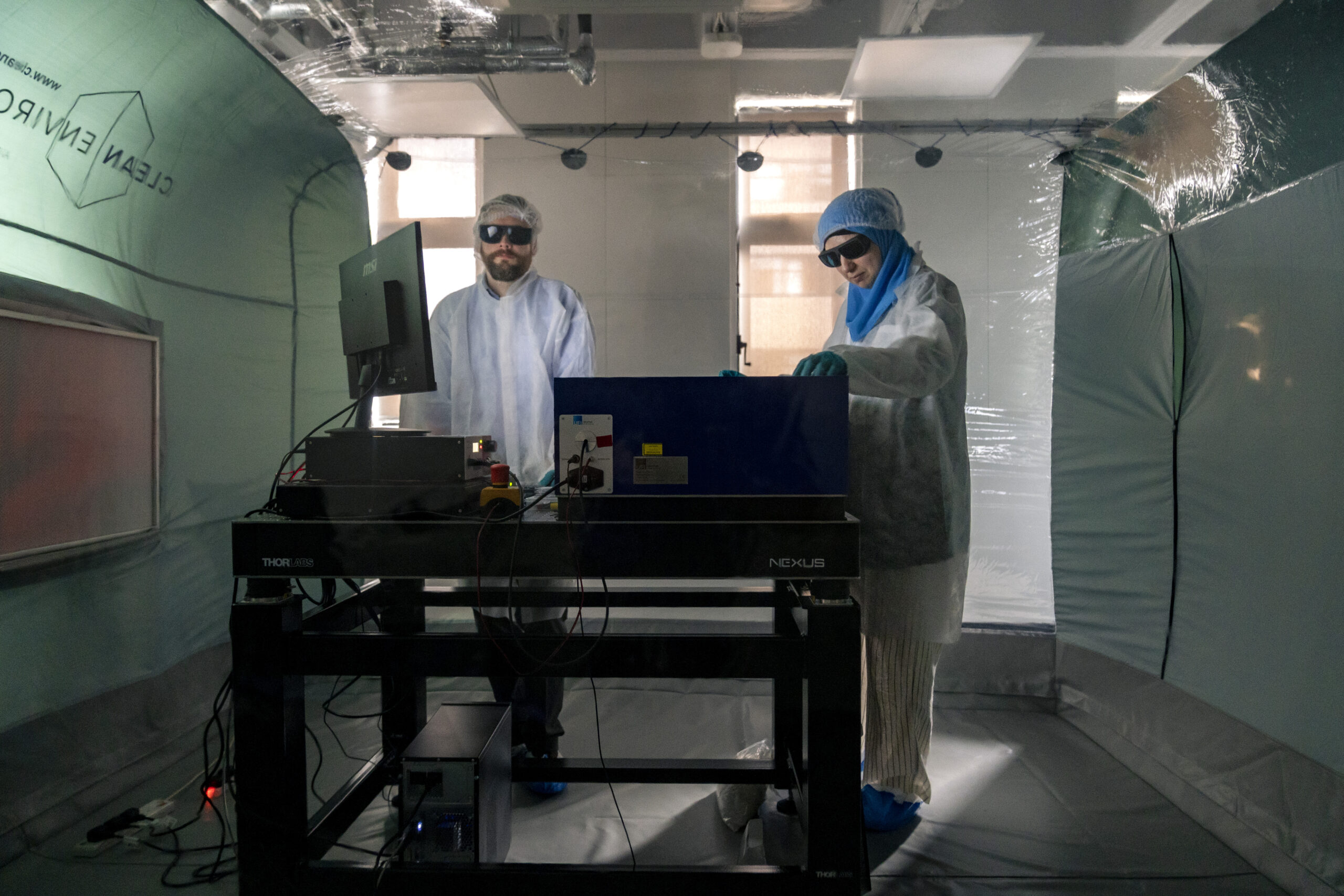
Clean Tent supporting Optical Measurement at University Research Facility.
Application Overview: Controlled Laboratory Environments for Optical Measurement.
High-sensitivity optical measurement systems in biomedical engineering and photonics require tightly controlled laboratory environments. Airborne particulate contamination can introduce optical scatter, reduce measurement accuracy, and affect the repeatability of precision optical techniques [1].
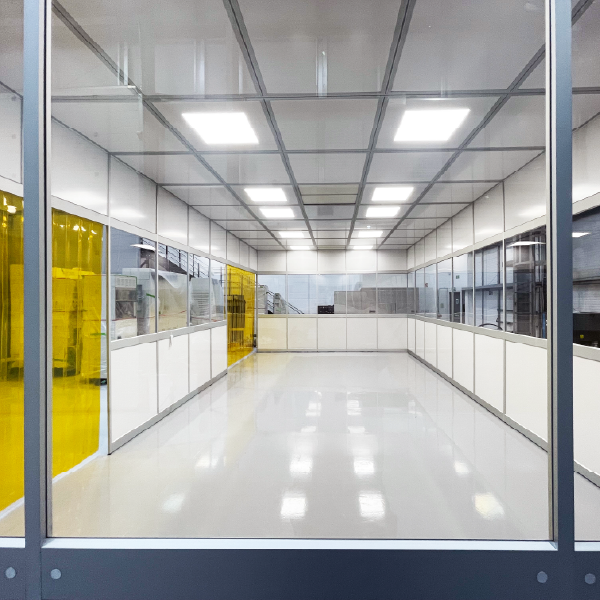
The Monmouth Scientific Clean Tent provides a particle-reduced, controlled environment for university research laboratories, specifically supporting a Cavity Ringdown Optical Assessment Facility [3]. By maintaining a low-particulate workspace, the Clean Tent 675 allows researchers to conduct high-precision optical measurements without the cost and complexity of building a permanent cleanroom [4].
This solution demonstrates how Monmouth Scientific’s modular cleanroom systems enhance research outcomes by improving environmental control at the point of measurement [3].
About Cavity Ringdown Spectroscopy.
Cavity Ringdown Spectroscopy (CRDS) is a sensitive optical measurement technique for quantifying absorption in gases, liquids, and solids [1]. Unlike conventional absorption spectroscopy, which measures transmitted light intensity, CRDS calculates the exponential decay time of light within a high-finesse optical cavity. This approach enables detection of extremely small absorptions, often down to parts-per-billion concentrations, with exceptional repeatability and accuracy [2].
CRDS is widely used in biomedical research, photonics, and advanced optical laboratories, as it provides:
- High sensitivity for trace-level absorption detection [2]
- Immunity to laser intensity fluctuations [2]
- Non-destructive measurement of samples [2]
- Rapid, real-time monitoring of dynamic processes [2]
Because CRDS relies on extremely precise light decay measurements, the technique is highly sensitive to environmental disturbances, such as airborne particles, airflow turbulence, and temperature fluctuations [1].
The Clean Tent solution addresses these challenges by providing a localised, particle-reduced environment that maintains optical path integrity and supports reliable, high-precision optical measurements [3].
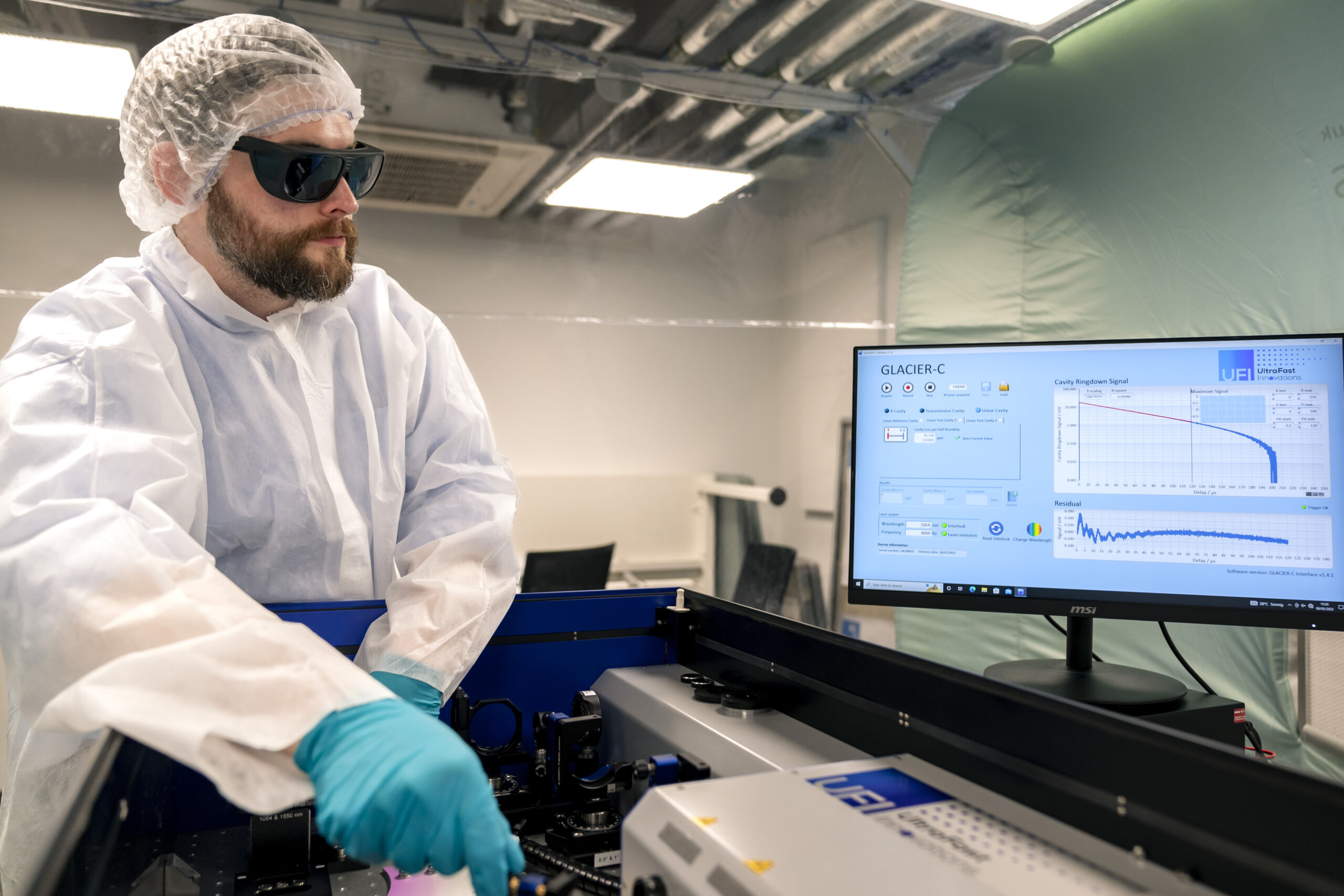
Technical Challenge: Environmental Control in Optical Research.
In a standard laboratory, uncontrolled environmental conditions can degrade signal-to-noise ratio, reduce measurement repeatability, and increase experimental variability in CRDS systems [1]. The research team required a solution that could:
- Minimise particulate contamination in the measurement zone [3]
- Provide uniform, stable airflow for consistent results [3]
- Integrate into the existing laboratory footprint without major modifications [4]
- Protect sensitive optical components from environmental interference [3]
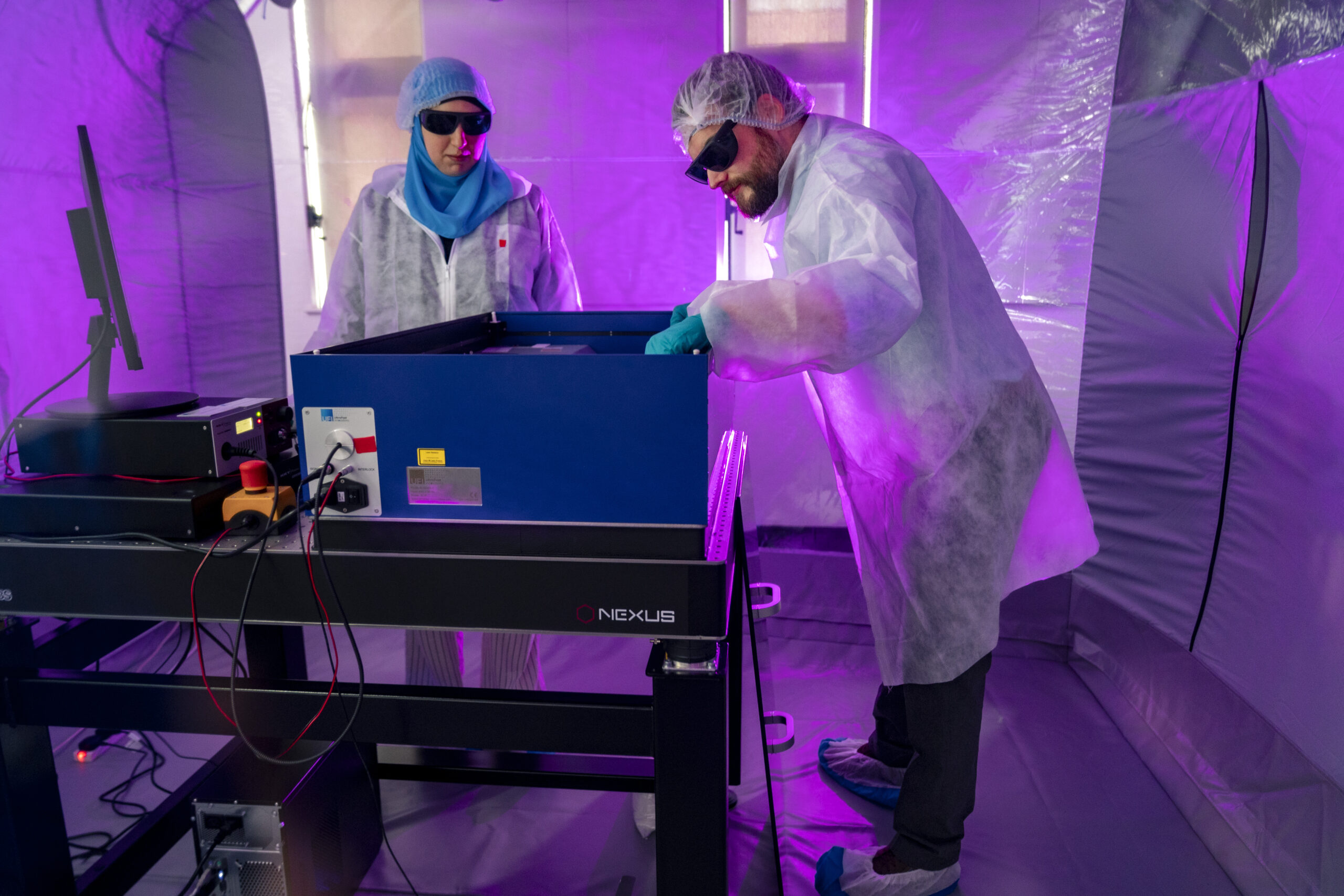
Solution: Monmouth Scientific Clean Tent 675.
The Clean Tent 675 was installed around the optical assessment apparatus to create a controlled laboratory environment [3]. HEPA-filtered airflow maintains a particle-reduced workspace, while the compact and flexible design allows integration into existing research laboratories without disruption [4].
Inside the controlled environment, the optical cavity experiences reduced background scatter, improved measurement stability, and enhanced repeatability [3]. The modular configuration ensures the enclosure can adapt to evolving experimental requirements, providing both flexibility for research teams and consistent environmental control [3].
Operational Outcomes: Enhanced Optical Measurement.
Using the Clean Tent, the research team achieved measurable improvements in experimental reliability and data quality [3]. Key outcomes include:
- Improved Measurement Accuracy: Reduced airborne particles enhance CRDS signal clarity and repeatability [3].
- Rapid Integration: Installation required minimal modification to the laboratory footprint [4].
- Operational Flexibility: The modular enclosure adapts to changing experimental configurations and research needs [3].
This solution allows researchers to maintain high-precision optical measurements consistently, supporting both routine experiments and advanced photonics applications [2].
Conclusion: Monmouth Scientific Clean Solutions for High-Precision Research.
Environmental control is critical for precision optical research. The Monmouth Scientific Clean Tent demonstrates how a modular, particle-reduced enclosure can improve the reliability of cavity ringdown spectroscopy and other high-sensitivity optical measurements [3].
This university-based application highlights the benefits of targeted clean environments: enhanced data quality, operational flexibility, and cost efficiency, all without the need for permanent cleanroom construction [4].
References.
- Berden, G., Engeln, R., & O’Keefe, A. Cavity Ring-Down Spectroscopy: Techniques and Applications.
- Yver Kwok, C. et al. Comprehensive laboratory and field testing of cavity ring-down spectroscopy analyzers (Atmospheric Measurement Techniques, 2015).
- Monmouth Scientific. Clean Tent Product Documentation – Technical specifications and performance of the Clean Tent including ISO Class 5 environment and HEPA/ULPA filtration efficiency.
- Monmouth Scientific. Understanding Clean Tents: A Complete Guide – Guide on clean tent design and application for controlled environments.
Trusted by Leading Facilities.
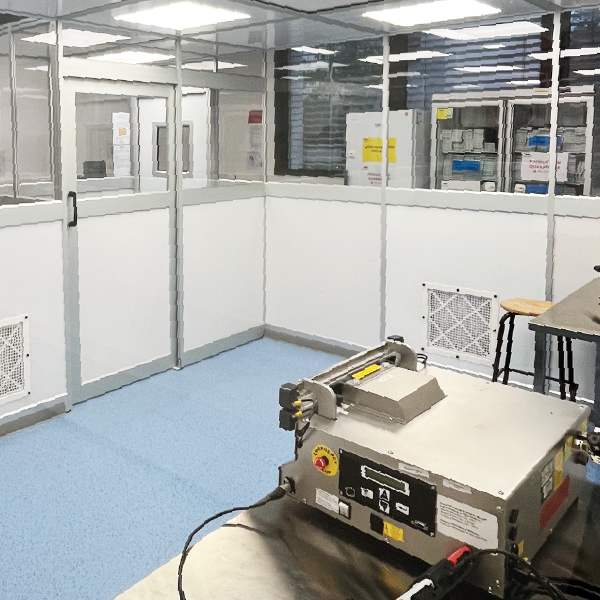
WOMED
Product | Modular Cleanroom
Sector | Life Science & Pharmaceutical
Location | Montpellier, FRA
NIKON Precision
Product | Modular Cleanroom
Sector | Engineering & Manufacturing
Location | West Lothian, UK

Bloodhound Land Speed
Product | Clean Tent
Sector | Engineering & Manufacturing
Location | Berkeley, UK