


What Is Activated Carbon? A Guide to Activated Carbon Filtration
How Activated Carbon Filters Protect Laboratory Environments
Activated carbon is a highly porous form of carbon used to capture gases, vapours, odours and volatile organic compounds (VOCs) from air. In laboratory fume cupboards, contaminated air passes through an activated carbon filter where molecules are retained on the carbon’s enormous internal surface through a process called adsorption.
How does Activated Carbon work?
Activated carbon filtration works through the forces exerted by its atoms. These forces, known as Van der Waals forces, leads to the adsorption of molecules on the surface of the activated carbon.
- Physical Adsorption: This involves the attraction of gas molecules to the surface of activated carbon. These are weak intermolecular forces that cause the gas molecules to adhere to the carbon surface without any chemical reaction.
- Chemical Adsorption (Chemisorption): This involves a stronger interaction where gas molecules chemically react with the surface of the activated carbon. The process can convert the adsorbed substance into another compound that is either more readily adsorbed or less hazardous.
Adsorption in activated carbon filters is a sophisticated process dependent on the dwell time (the period the contaminated air spends in contact with the activated carbon) and the airflow rate (which influences how fast the air passes through the filter).
- Dwell time: If the air passes through the filter too quickly, there is insufficient time for the adsorption process to occur fully, leading to incomplete removal of contaminants. Conversely, adequate dwell time ensures that the contaminants have sufficient contact with the activated carbon, allowing for maximum adsorption before the air is recirculated back into the environment.
- Airflow: A face velocity of 0.3 to 0.5 meters per second is recommended to achieve proper containment and ensure effective filtration. If the airflow rate is too high, it reduces the dwell time, decreasing the filter’s effectiveness. Conversely, too low a flow rate can lead to insufficient air exchange and poor containment of fumes.
The Role of Recirculating Fume Cupboards
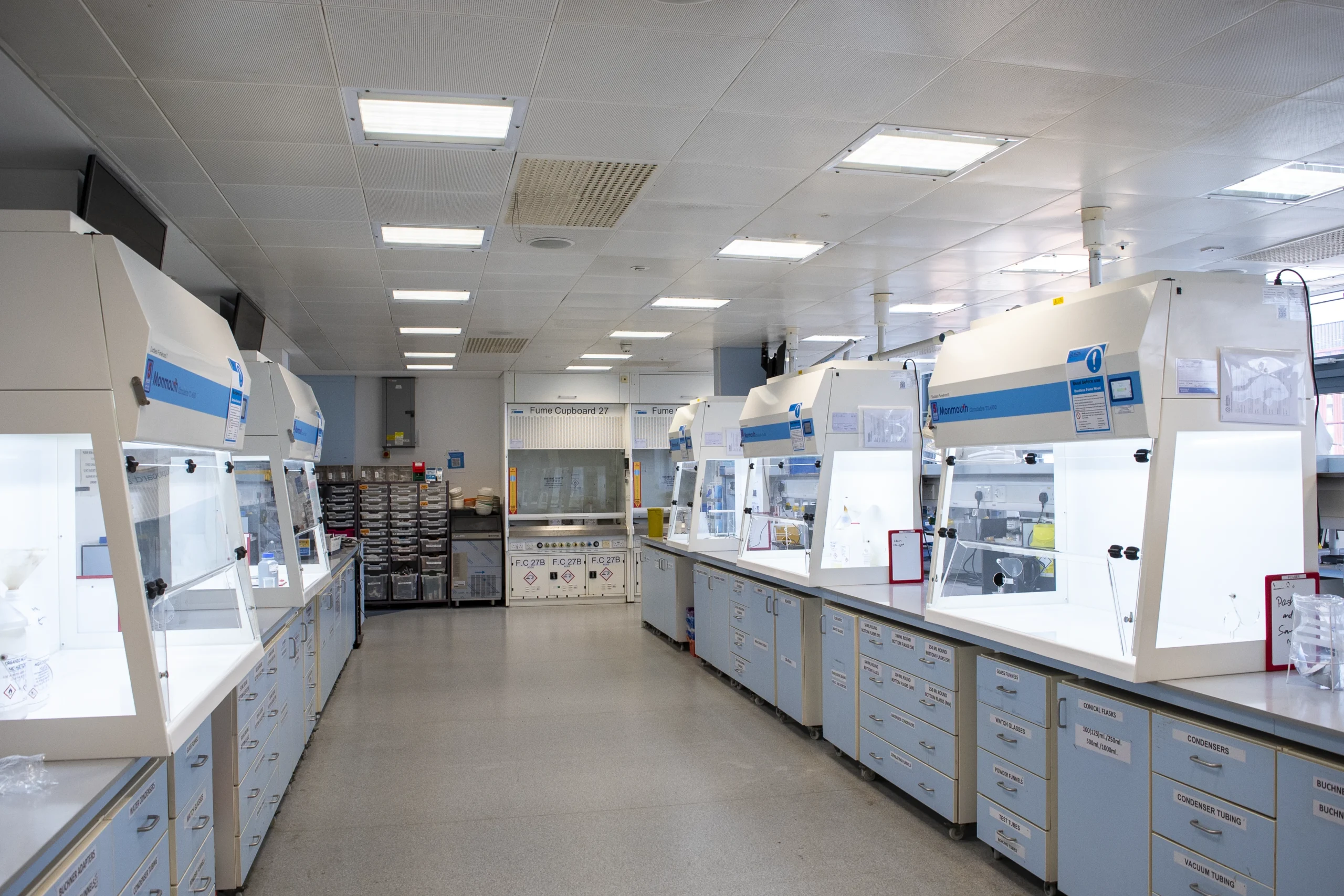
Recirculating fume cupboards are designed to protect laboratory personnel from hazardous fumes and vapours without the need for external ducting. These systems rely on filtration to remove contaminants from the air before it is recirculated back into the laboratory.
- Enhanced Safety: By removing harmful substances from the air, activated carbon filters significantly enhance the safety of laboratory personnel.
- Cost-Efficiency: Unlike ducted fume cupboards, recirculating solutions do not require extensive ductwork. The use of activated carbon filters makes these systems more cost-effective to install and maintain.
- Environmental Benefits: Recirculating fume cupboards are more environmentally friendly compared to their ducted counterparts. They do not expel contaminated air into the atmosphere, reducing the laboratory’s environmental footprint.
- Flexibility and Portability: The absence of ductwork means that recirculating fume cupboards are highly portable and can be easily relocated within a laboratory or to different facilities. This flexibility is particularly valuable in dynamic environments where workspace configurations frequently change.
Advantages & Challenges
- High Surface Area: The effectiveness of activated carbon filters lies in their vast surface area, often equated to several thousand football fields.
- Customised Filters: Filters can be tailored to target specific types of contaminants. For example, some filters may be impregnated with chemicals to enhance their ability to adsorb certain gases or vapours.
- Filter Design: The design of the filter bed, including its depth and capacity, is crucial. Deeper and larger capacity filters provide more surface area and longer dwell times, enhancing the adsorption efficiency.
- Ease of Replacement: Activated carbon filters are designed for easy replacement, ensuring that the fume cupboard can maintain optimal performance with minimal downtime.
- Indicator Systems: Recirculating fume cupboards come equipped with indicator systems that alert users when the activated carbon filters are reaching saturation, ensuring continuous protection.
- Regeneration and Reusability: While activated carbon can be reused, its effectiveness can diminish over time due to the accumulation of adsorbed substances. Techniques like thermal regeneration can restore some of its adsorption capacity.
- Selective Adsorption: The efficiency of activated carbon can vary depending on the properties of the adsorbate. For example, conventional activated carbon is less effective at adsorbing polar substances like ketones and aldehydes, necessitating the development of specialised adsorbents for such compounds.
What does activated carbon remove?
| MonSci Carbon Code | Suitable for Removal of |
| AC | General Organic Compounds (iodine, Solvents, Odours etc) |
| ACID | Acidic Compounds (and general organics) |
| ACR | Alkali Compounds (and general organics) |
| AMM | Ammonia & amine Compounds (and general organics) |
| CYN | Cyanide Compounds (and general organics) |
| ETHER | Ether Compounds (and general organics) |
| FORM | Aldehydes (and general organics) |
| SUL | Sulphur Compounds (and general organics) |
| MCH | Special blend of up to 4 of the above carbon types |
| ED | Tri-Layered Filter for schools (organic, acid & alkali removed) |
Activated carbon is a cornerstone of recirculating fume cupboards, providing a safe, efficient, and environmentally friendly solution for managing hazardous fumes. Its adsorption capacity, coupled with the flexibility and cost-efficiency of ductless systems, makes activated carbon an indispensable component in modern laboratory and industrial manufacturing safety protocols.