

PCR Cabinets Explained
Why Does Contamination Control Matter in PCR Workflows?
Polymerase Chain Reaction (PCR) is widely used across molecular biology, diagnostics, research, biotechnology and many other scientific disciplines. Because PCR can amplify very small quantities of genetic material, the process is highly sensitive to contamination. Even small amounts of unwanted material can affect results, leading to unreliable outcomes and repeat testing.
For laboratories carrying out sensitive PCR workflows, controlling the environment in which samples and reagents are prepared can therefore be an important consideration.
But what exactly is a PCR cabinet, how does it support contamination control, and when might a laboratory benefit from using one?
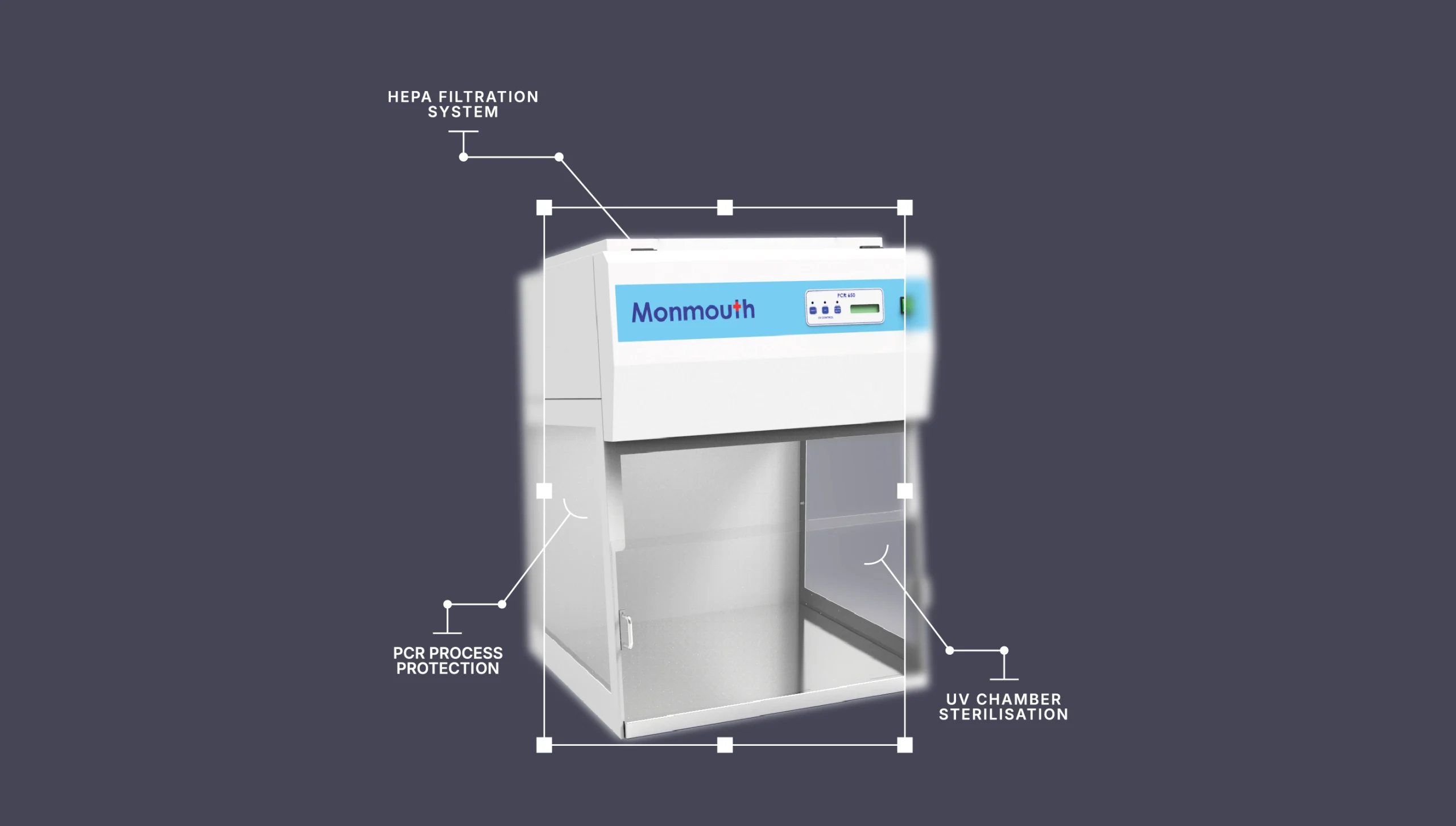
A PCR cabinet is a dedicated clean-air workspace designed to support the preparation stages of PCR workflows. Unlike a general laboratory workstation, it is designed around the contamination-control requirements associated with molecular biology.
A typical PCR workflow involves preparing reagents, handling samples and assembling reaction mixtures before amplification. During this stage, maintaining a controlled working environment can help reduce the risk of contamination affecting the process.
A dedicated PCR cabinet typically provides:
- HEPA-filtered airflow to provide a clean working environment
- Controlled airflow to support sample and reagent preparation
- UV decontamination as a supporting measure between workflows
The aim is not to replace good laboratory practice, but to provide a dedicated environment that supports it.
The sensitivity of PCR is one of its greatest strengths, but it can also make contamination a significant concern. Potential sources can include previous PCR products, environmental particles, inadequate separation between workflows and poor handling practices. Where contamination enters the preparation process, it can potentially affect subsequent results.
Environmental control is therefore one part of a wider contamination-control strategy. Effective practice also relies on appropriate laboratory procedures, good workflow design, correct handling techniques and thorough cleaning. A dedicated PCR cabinet can support this approach by creating a defined workspace for preparing samples and reagents before amplification.
Not every PCR workflow will require a dedicated cabinet. The decision depends on the application, contamination risks, workflow and level of environmental control required.
A dedicated PCR preparation environment may be particularly useful where laboratories work with sensitive assays, handle high-value or limited samples, perform PCR frequently or routinely, need greater separation between preparation workflows, or are establishing or upgrading a dedicated molecular biology facility.
PCR is used across a wide range of applications. Molecular biology research laboratories may use dedicated preparation environments to support sensitive research workflows, while biotechnology and pharmaceutical organisations may use PCR as part of wider research and development programmes. Clinical and diagnostic research, as well as food, veterinary and environmental testing, can also benefit from controlled preparation conditions where reliable molecular analysis is important.
When selecting a PCR cabinet, the laboratory’s specific workflow and contamination-control requirements should be the starting point.
- Workflow: Consider the type of samples being handled, how frequently PCR preparation takes place and how the cabinet will fit into the existing laboratory layout and processes.
- Contamination control: Consider the level of environmental control required and how the cabinet will support sample preparation and workflow separation.
- Decontamination: Cleaning should remain part of the laboratory’s established procedures. Features such as UV decontamination can provide additional support between workflows but should not be considered a replacement for cleaning.
- Usability: A cabinet should provide practical access to the workspace, comfortable working conditions and straightforward operation and maintenance.
The most suitable solution is ultimately the one that supports the laboratory’s workflow while complementing its wider contamination-control procedures.
PCR Protection Returns
The Circulaire® PCR Cabinet is now back in production at Monmouth Scientific, following renewed demand for dedicated PCR preparation environments.
Designed to support contamination-conscious workflows, the Circulaire® PCR Cabinet provides a controlled clean-air workspace for PCR sample preparation.
For laboratories establishing new PCR capabilities, upgrading existing facilities or looking to strengthen contamination control, the Circulaire® PCR Cabinet provides a dedicated solution designed around the needs of molecular biology applications.