

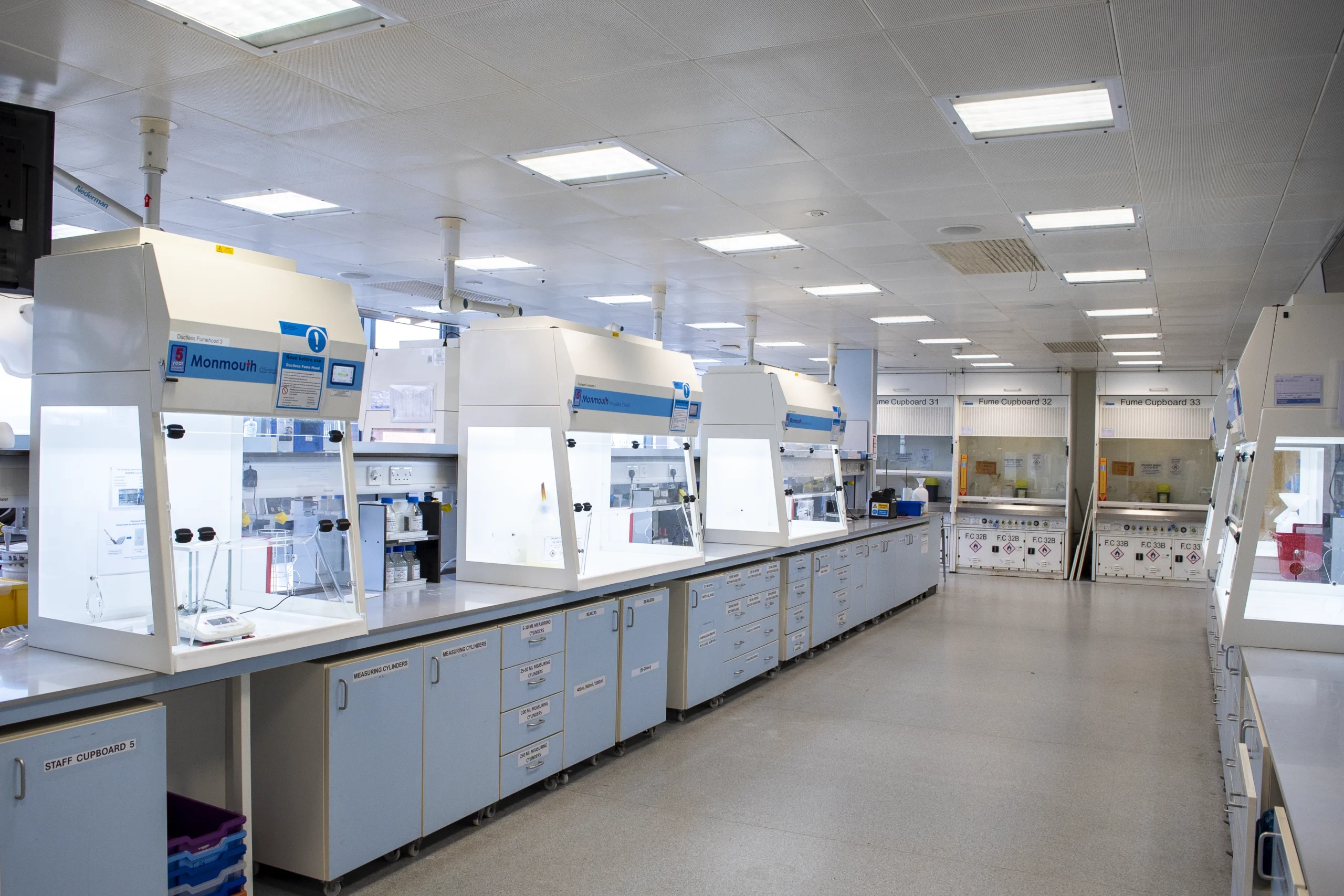
Recirculating Technology – Performance, Energy Efficiency & Sustainability Benefits
Laboratories and industrial environments are under growing pressure to reconcile three competing demands: maintaining robust containment performance, reducing energy use and carbon emissions, and controlling the rising costs associated with HVAC infrastructure. While traditional ducted containment systems have long been considered the default solution for managing hazardous substances, they often do so at the expense of flexibility and energy efficiency.
Modern recirculating containment technologies now offer a proven alternative. When properly managed, these systems can deliver high levels of containment performance while dramatically reducing energy consumption, operating costs, and environmental impact.
Rethinking Containment in Energy-Constrained Laboratories.
Conventional ducted fume cupboards operate by continuously extracting large volumes of conditioned laboratory air and exhausting it outside the building. While effective for high-hazard or high-volume chemical applications, this approach imposes a significant energy penalty. The continuous removal of conditioned laboratory air often results in increased make-up air requirements, placing sustained demand on HVAC systems and elevating long-term operating costs.1
Recirculating containment systems take a fundamentally different approach. Instead of exhausting air externally, contaminated air is passed through high-efficiency, multi-stage filtration before being safely returned to the laboratory. This shift in airflow strategy underlies their efficiency and sustainability advantages.
Performance and Safety: Containment through Filtration and Verification.
Ductless hoods have been used in laboratories for over 40 years, evolving from simple devices for nuisance odours and low-toxicity materials to more sophisticated containment systems.2 This evolution has rightly been accompanied by caution, particularly due to earlier limitations in filter selectivity and user control;3,4 however, modern recirculating designs—when correctly specified, monitored, and maintained—can deliver effective containment within defined chemical and operational limits.
The key determinant of safety in these systems is filtration performance. Recirculating systems rely on filter media that are carefully selected for the specific chemical or particulate hazards present. Activated carbon filters adsorb hazardous vapours, while HEPA filters capture fine particulates; combined systems allow tailored protection for mixed risks.1
Crucially, modern recirculating systems integrate real-time monitoring for airflow, face velocity, and filter saturation.4 Built-in sensors and alarms provide continuous assurance that containment conditions remain within validated parameters, addressing one of the historical concerns associated with early ductless technologies.2 In fact, a recent study evaluating ductless fume hoods demonstrated that, when face velocities are controlled within defined ranges and filtration capacity is maintained, operator exposure can remain well below occupational exposure limits for approved chemicals.4
Energy Efficiency: Eliminating the HVAC Penalty.
The most immediate and measurable advantage of recirculating containment systems is their impact on energy use. Because conditioned air is retained within the laboratory, the need for continuous make-up air is eliminated. This sharply reduces heating and cooling loads compared with ducted systems, which can exhaust hundreds or thousands of cubic feet of air per minute.2
Experimental testing and building energy modelling have shown that, when used for defined and approved applications, recirculating systems can maintain acceptable safety margins while delivering considerable energy savings.4 Lifecycle cost comparisons indicate that this translates into materially lower operating costs—approximately £12,254 over five years for a recirculating unit versus around £15,647 for a ducted system, representing an estimated 28 % cost saving, alongside a reduced environmental footprint.1
Sustainability and Environmental Impact.
Lower energy use directly translates into a reduced carbon footprint. As organisations align operations with sustainability frameworks such as ISO 14001, BREEAM, LEED, and laboratory-specific initiatives like My Green Lab, containment technologies that minimise HVAC demand are increasingly prioritised. By retaining conditioned air within the laboratory, recirculating systems reduce indirect emissions associated with heating, cooling, and air movement, supporting organisational net-zero and decarbonisation strategies.
Sustainability benefits extend beyond energy. Ducted systems often require extensive building modifications, including ductwork, roof penetrations, external fans, and structural reinforcements. These interventions increase material use and create long-term inflexibility. Recirculating systems, by contrast, are typically standalone or minimally invasive, reducing construction impact and preserving building fabric.1,2
A Finer Point on Flexibility and Lifecycle Value.
In addition to performance and efficiency benefits, recirculating containment systems offer practical advantages that enhance their overall value. Installation is faster and less disruptive than ducted alternatives, as no external exhaust integration is required. This makes them particularly suitable for retrofits, temporary facilities, or space-constrained laboratories.
Recirculating units can also be relocated or integrated around ducted environments as workflows evolve, allowing facilities to adapt without major capital investment. This flexibility was demonstrated in a mixed-installation case study involving Green Fuels Research, in which the Circulaire® CT1100 Recirculating Fume Cupboard was used for solvent-free, low-risk tasks, freeing ducted cupboards for higher-hazard processes. The result was improved utilisation of existing infrastructure and increased overall laboratory throughput.1
From a financial perspective, lifecycle cost comparisons show that non-ducted systems can deliver substantial savings over five years, even when maintenance and monitoring are included. Lower energy consumption, reduced installation costs, and avoided building modifications combine to produce a lower total cost of ownership.1
Balancing Technology Choice with Application Needs.
It is important to recognise that recirculating and ducted systems are not mutually exclusive. Ducted containment remains essential for high-hazard, high-volume, or poorly characterised chemical processes. However, treating ducted systems as the default for all applications can lead to unnecessary energy use and cost.
A balanced containment strategy begins with hazard identification, defines required performance levels, and matches technology to task. Within this framework, modern recirculating containment systems represent a safe, efficient, and sustainable option for a wide range of laboratory and industrial applications.
Conclusion: Reframing Containment for Energy-Efficient Environments.
Modern recirculating containment technology demonstrates that high performance and sustainability are no longer competing objectives. Through validated filtration and continuous monitoring, these systems deliver reliable containment while reducing energy demand, operating costs, and environmental impact.
For organisations aligning infrastructure with sustainability and safety objectives, recirculating containment systems represent a well-established and increasingly important part of the modern laboratory.
Recent Articles.
Recent Case Studies.
References and Further Reading.
- Burnett, R. (2026). Life-Cycle and Performance Comparison of Non-Ducted and Ducted Fume Cupboards: A Technical White Paper for Facility Managers & Safety Leads. Monmouth Scientific. Available at: https://monmouthscientific.co.uk/technical-white-papers/
- DiBerardinis, L. (2015). The application of ductless hoods in laboratories: What everyone should know. Journal of Chemical Health and Safety. doi.org/10.1016/j.jchas.2015.11.003
- (2005). Ductless Fume Hood Review. Available at: https://ors.od.nih.gov/sr/dohs/Documents/dohs-ductless-fume-hoods-review.pdf
- Li, Q., et al. (2007). Research on the Energy Saving and Safety of Ductless Fume Hood. Refrigeration Air Conditioning & Electric Power Machinery. Available at: http://dianda.cqvip.com/Qikan/Article/ReadIndex?id=24249901&info=bhbTTdDTnJKVeRqGs0ywQAMEy04HcvP+0dSmXZidVlA=