

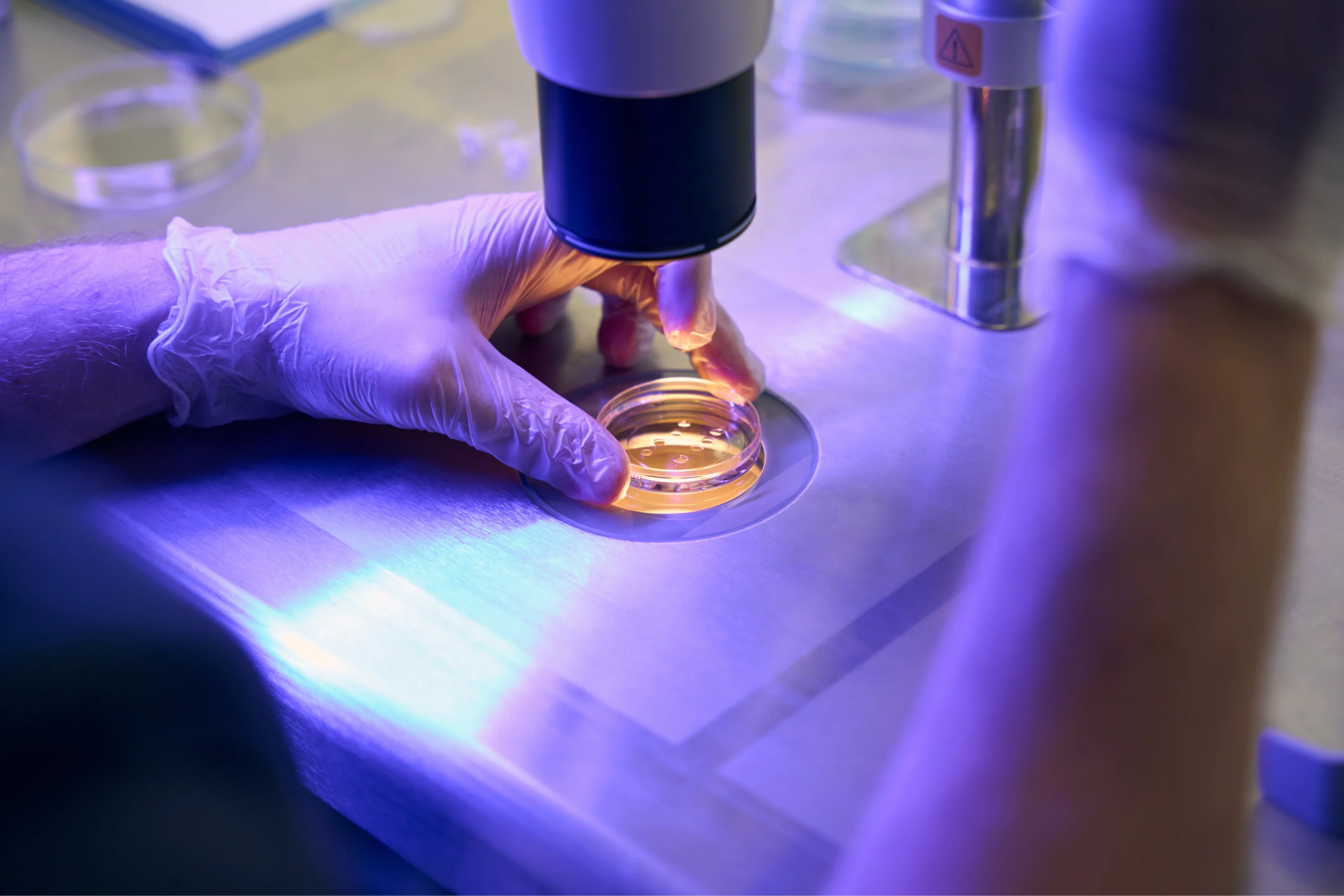
Class 2 Biological Safety Cabinets in Cellular Agriculture
Application Overview | Precision Cultivation of Functional Animal Fat for Next-Generation Food Systems.
Cellular agriculture processes are increasingly used to produce specific animal-derived components without reliance on conventional livestock systems. A key focus is the controlled production of animal fat as a functional ingredient, intended for use in plant-based and hybrid food formulations where flavour, texture, and thermal behaviour must closely match those associated with traditional meat products.
A biotechnology organisation working in this field is developing cultivated animal fat derived from mammalian[i] stem cells. These cells are expanded under tightly controlled conditions and directed towards lipid-forming pathways[ii]. This process results in lipid-rich cellular material that can be harvested and processed for use as a food ingredient.
Containment in Cellular Agriculture.
The production of mammalian cell-derived materials requires tightly controlled aseptic environments throughout expansion and differentiation stages. In processes involving lipid differentiation, maintaining stable environmental conditions is essential, as small variations can influence metabolic activity and reduce reproducibility across cultures.
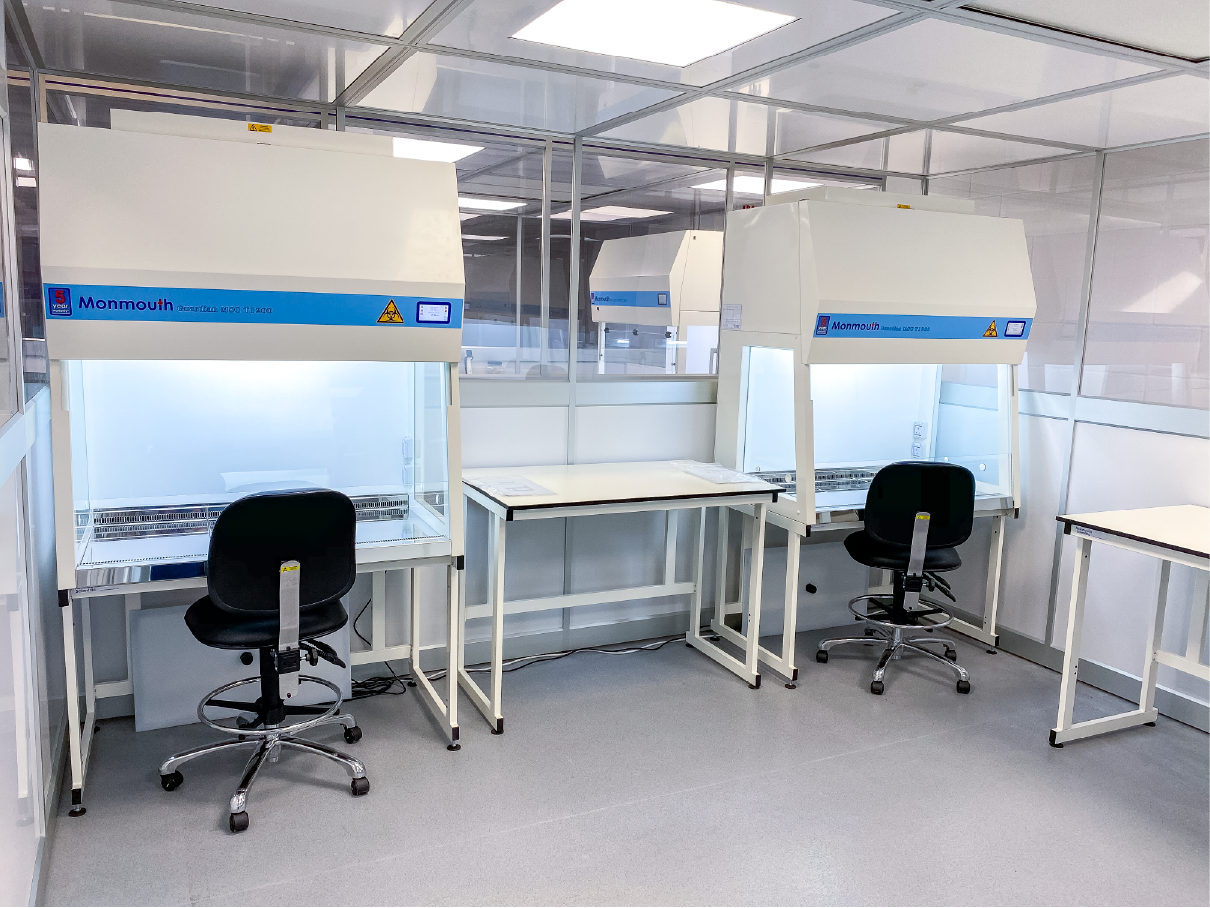
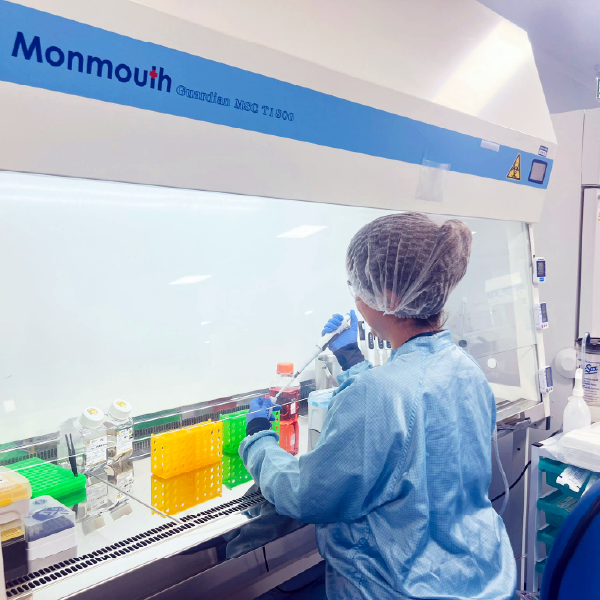
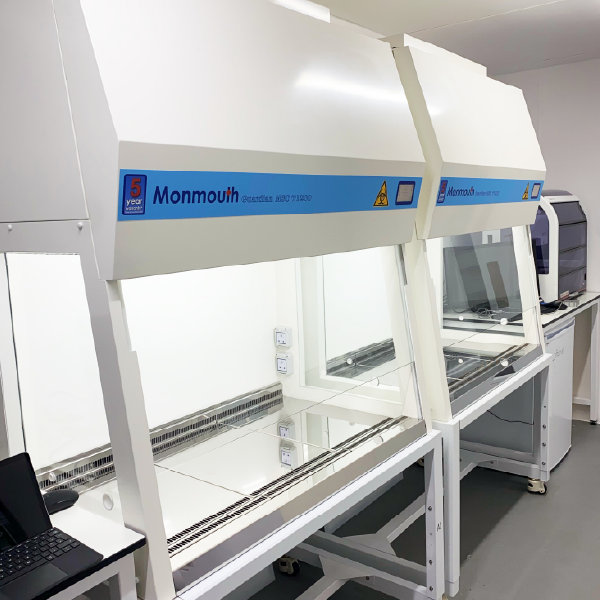
In this application, Monmouth Scientific’s Class 2 Biological Safety Cabinets are used as primary containment workstations supporting:
- Handling of mammalian stem cell cultures
- Preparation of culture media and reagents
- Sub-culturing and expansion of lipid-differentiating cell lines
- Controlled manipulation of sensitive biological materials
The cabinets are certified to BS EN 12469:2025[iii], confirming compliance with current requirements for microbiological safety cabinets in relation to operator protection, product protection, and environmental safety performance.
Protection is achieved through HEPA-filtered unidirectional airflow combined with negative pressure containment, maintaining separation between the operator, the working zone, and the surrounding laboratory environment.
Application Context | From Cells to Functional Fat.
The process begins with a small population of animal-derived stem cells, which are expanded and guided through defined pathways. These cells are then metabolically directed to accumulate lipid structures, forming lipid-rich cellular biomass suitable for downstream processing.
Once harvested, this cultivated fat is used as a functional ingredient within food manufacturing systems, where it is incorporated into plant-based or hybrid formulations. Its role is to replicate key performance characteristics of conventional animal fat, particularly:
- Flavour release during cooking and heating
- Thermal stability within structured food systems
- Texture development and binding in meat analogues
- Sensory properties comparable to animal-derived fats
Unlike finished food products, this material functions as a formulation component, integrated into broader food production processes to influence structure and sensory performance.
Solution | Why Class 2 Biological Safety Cabinet are Critical in This Environment.
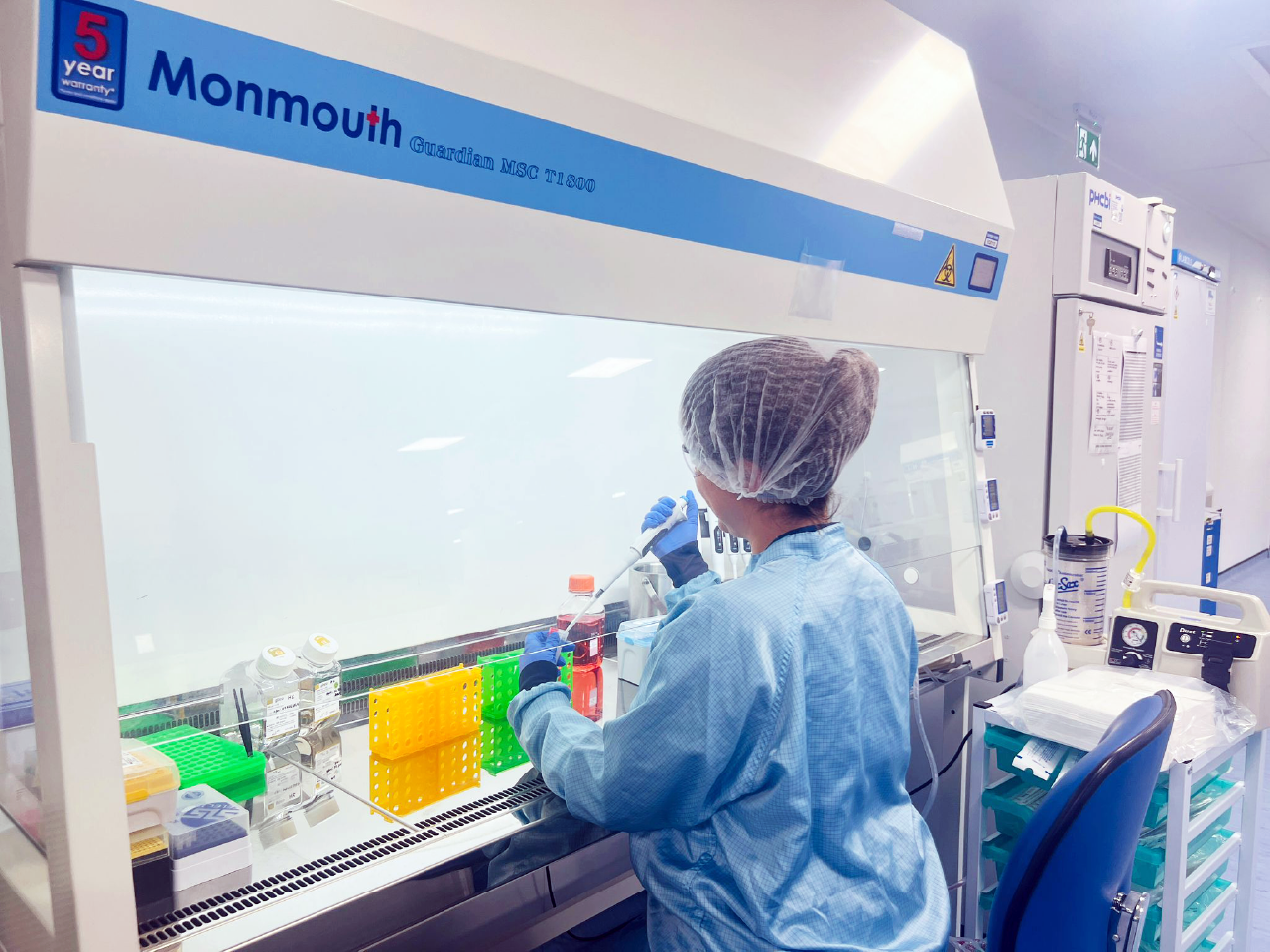
Class 2 Biological Safety Cabinets are central to maintaining reproducible cell culture conditions in this application. Their design supports consistent aseptic technique during extended and sensitive handling procedures:
- ISO Class 5 air quality within the working zone
- HEPA-filtered laminar airflow for product protection
- Negative pressure containment for operator safety
- Low-turbulence airflow supporting stable handling conditions
- Ergonomic design enabling sustained aseptic manipulation
In cellular agriculture workflows, reproducibility is directly dependent on environmental stability. These cabinets provide a controlled platform that supports consistent cell expansion, differentiation, and lipid accumulation processes.
The production of cell-derived animal fat represents a shift in how specific functional food components are generated, separating them from conventional agricultural supply chains while retaining their role in food formulation systems.
Reliable outcomes depend on tightly controlled upstream environments where process integrity and airflow stability are maintained throughout cell handling and differentiation stages.
Monmouth Scientific’s Class 2 Biological Safety Cabinets provide this controlled containment environment, supporting consistent mammalian cell culture workflows from early expansion through to lipid-producing stages.
In these applications, environmental control is a defining factor in achieving reproducible, scalable biological production.
[i] Warm-blooded animals that nourish their young with milk.

[ii] Lipids are a class of biological molecules, including fats and oils, that function as energy storage and structural components in living cells

[iii]BS EN 12469:2025, released on November 21, 2025.

The latest European standard for biological safety cabinets (BSCs).
Trusted by Leading Facilities.
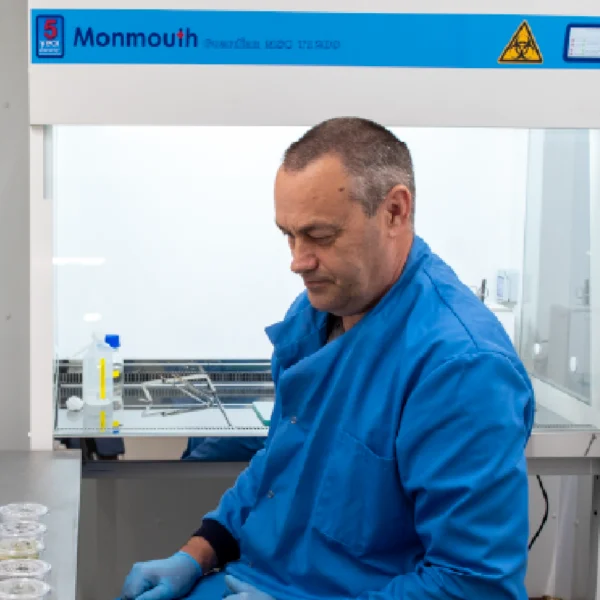
National Trust
Product | Class 2 Biological Safety Cabinet
Sector | Education & Research
Location | Devon, UK
Molecular Devices
Product | Class 2 Biological Safety Cabinet
Sector | Life Science & Pharmaceutical
Location | Cardiff, UK
Open Cell Labs
Product | Class 2 Biological Safety Cabinet
Sector | Life Science & Pharmaceutical
Location | London, UK